At Advertising Week 2026, a consistent theme emerged: the way media and marketing operate is changing quickly, and brands need to reconsider the assumptions behind their plans to improve discovery.
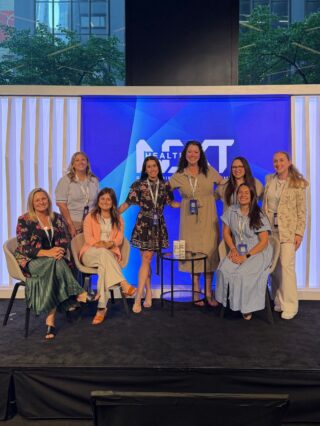
Scott Ensign, our Chief Strategy Officer, and Nicole Hamlin, VP of Integrated Planning & Partnerships, saw that theme surface across panels, conversations, and announcements throughout the week. The changes they heard about were broad enough to suggest more than another round of incremental adjustment.
Discovery Isn’t What It Used To Be
For decades, marketers could rely on a familiar sequence: build awareness, earn the click, retarget, and convert. That path is becoming less reliable as discovery and decision-making move into new environments.
“The way people connect with brands has completely changed,” Ensign observed from the show floor. “It’s not about website visits or ecommerce transactions anymore. People are discovering brands in completely different ways.” The shift is already visible in how people search, evaluate options, and make decisions.
Hamlin encountered the same shift in every conversation about healthcare and multi-location strategy. “The funnel is upended,” she said. “Many in-market consumers can now identify a need, compare options, and take action without ever clicking a website or landing in a retargeting audience.”
For brands, the challenge is no longer limited to ad performance. Traditional media plans can miss the places where consumers now encounter information and form preferences.
The Real Game: Influence and Intent
Brands are responding by putting more emphasis on the people and platforms that shape consideration before a consumer reaches a website.
“Brands are now spending an overwhelming majority of their media budgets on creator and influencer,” Ensign pointed out. “That’s not a trend. That’s a shift in where the leverage is. People are being influenced in new ways, and brands are following the money.”
That creates a particular challenge for regulated industries such as healthcare, where maintaining brand control has long been a priority.
“Brand narrative isn’t controlled by the brand anymore. It’s controlled by those experiencing the product,” Hamlin noted, referencing an insight from “Where Pharma & Healthcare Play Next,” a panel moderated by Scott Ensign. For regulated industries, understanding that change is difficult but necessary.
Brand safety still matters, but control is no longer a realistic goal. Brands need systems that help them participate credibly on emerging platforms and develop content at the pace of the people influencing their audiences.
The Signals That Matter
As discovery shifts away from websites and retargeting, the signals that guide buying decisions are changing too.
“Brands need to feed signals that shape discovery and trust—signals for both human and machine interpretation,” Hamlin explained. The work starts with understanding which signals consumers follow, where they make decisions, and what information will help a brand be useful in those moments.
This is where agentic media and AI buying platforms come into play.
Agentic Is Moving Incredibly Fast
“Amazon just announced their agentic platform. Everyone is talking about universal buying platforms,” Ensign said. “The game is changing really, really fast.”
Agentic media uses AI agents to coordinate buying, creative, and audience targeting across channels. The technology is moving from concept to practice, giving brands a reason to begin testing how it may fit into their media operations.
As platforms, standards, and working practices take shape, early testing can help brands learn where agentic tools add value and where human judgment remains essential.
What This Means for Your Strategy
Planning cycles and budget allocations built for a more stable media environment need to become more adaptable.
“Rigid approaches to communications planning and budget allocations are no match for the continued transformation of how audiences discover brands,” Hamlin said. “Being found and relevant will require a shift towards flexible frameworks and intentionality around the signals that will guide in-market shifts.”
That means:
Build flexibility into the plan. Budget structures and planning processes should leave room to respond as discovery platforms and audience behavior change.
Identify the signals behind decisions. Impressions and clicks provide only part of the picture. Reviews, creator recommendations, search behavior, and AI assistant guidance may reveal more about how people choose within a category.
Create for speed as well as quality. Teams need ways to produce credible, useful content quickly without applying a six-month campaign process to every emerging opportunity.
Treat the brand narrative as collaborative. Brands can shape the conversation by giving creators, customers, and communities accurate information and room to tell the story in their own voices.
The Reset
Ensign offered a concise way to think about what’s next: “The advertising game is changing faster than most brands could possibly keep up. It’s time for a reset in how we think about leveraging marketing resources to drive outcomes, and it will take a quantum leap in how we go to market.”
Making that leap requires more than adopting new tools. It means understanding where consumers make decisions, who shapes those choices, which signals carry weight, and how the organization can respond as those conditions change.
Advertising Week reinforced a direction we’ve been focused on throughout the year: brands need operating models built to learn, adapt, and make decisions in a media environment that won’t hold still.